Gifts for Chefs 2026: The Best Japanese Knife Gifts by Budget
Basis Spec comparison · not hands-on tested
How we chose: makers' published specs, materials and price. We have not used these products ourselves. How we test
Quick answer
The safest crowd-pleasing knife gift is a Shun Classic or Tojiro DP gyuto/santoku (~$120-190); for a "wow" gift, a gift-boxed Damascus blade (~$200-350).
- Safest gift
- Shun Classic / Tojiro DP
- Best for beginners
- Santoku or gyuto, stainless
- "Wow" gift
- Gift-boxed Damascus
- Budget sweet spot
- $80-200
Buying from abroad? See how to order a Japanese knife online and what duties to expect
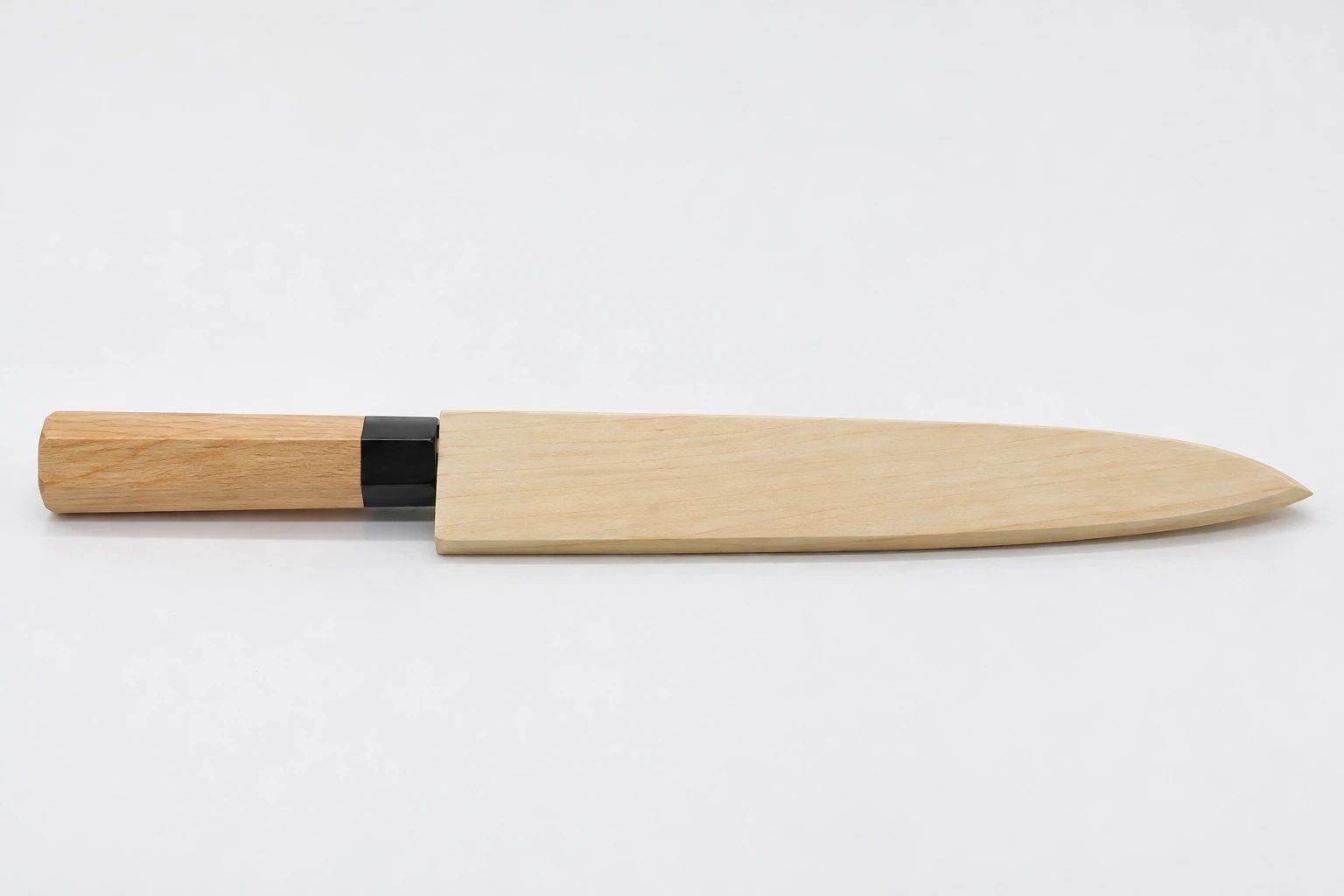
Table of Contents
TL;DR — the best knife gift, fast
If you only read one line: a Shun Classic or Tojiro DP santoku/gyuto is the safest crowd-pleasing knife gift. Beautiful, sharp, stainless, low-maintenance, and recognizable to anyone who cooks.
- Under $100 — MAC Superior santoku (~$85), MAC Chef Series chef's knife (~$90) or Kai Seki Magoroku (~$60-90) — the value sweet spot
- $100-200 — Tojiro DP santoku/gyuto (~$122-139), Shun Classic (~$190), Miyabi (~$140-200), or Misono UX10 (entry pieces from ~$170)
- Splurge / "wow" — gift-boxed Damascus or premium line (~$200-350+)
- For a beginner — stainless santoku 165-180mm
- For a serious cook — 210mm gyuto, Misono / Miyabi / MAC tier
- Souvenir from Japan — buy at Kappabashi with same-day engraving
- Chef who already owns good knives — a whetstone (~$40-55), a knife-friendly board (~$40-150) or a saya / magnetic strip (~$15-90) — see below
Short version: spend $80-200, choose stainless, and match the shape to how the recipient cooks. Everything below is the detail behind that sentence.
Why a Japanese knife is a great gift
A good knife is the rare gift that gets used every single day and improves the user's life every time. For anyone who cooks, upgrading from a dull supermarket blade to a properly sharp Japanese knife is a small revelation — onions stop stinging, tomatoes slice instead of squash, and prep becomes a pleasure instead of a chore.
Japanese knives carry an extra layer of meaning, too: centuries of swordsmithing heritage distilled into an object you hold every day. That story makes them a memorable present, especially when bought at the source. But the golden rule of gifting a knife is simple and honest: size the gift to the recipient's skill, not to your budget. A casual home cook will be happier with a sharp, easy-care $90 santoku than with a $400 carbon-steel showpiece they're terrified to chip or rust.
A few principles guide every pick below:
- Stainless for gifts, almost always. Unless you know the recipient is a knife hobbyist, choose a stainless steel core. Carbon steel demands maintenance most people won't sign up for.
- One great knife beats a cheap block set. Concentrate the budget on a blade they'll actually reach for.
- Shape over flash. A santoku or gyuto suits almost any kitchen; choose the look second.
- Prices are approximate. Every figure here is a rough range — street prices swing with retailer, finish, length, and exchange rates.
Best knife gift under $100
This is the most giftable band of all: real Japanese steel, gorgeous out of the box, and no anxiety about cost.
Editor pick: MAC Superior Santoku 170mm (SK-65, ~$85) or MAC Chef Series 8½" chef's knife (HB-85, ~$90)
MAC's two most affordable lines are our under-$100 gift default: a thin, light stainless blade from the Seki maker whose Professional knives are a restaurant-kitchen staple, easy to maintain and widely available. The Superior santoku is sub-zero tempered (retailers list 61 HRC); the Chef Series knife is a light, unbolstered all-rounder. The styling is understated rather than showy, which suits a recipient who'll judge it on performance. (The Tojiro DP, long our default "first real Japanese knife," now costs about $122 for the santoku and $139 for the 210mm gyuto, so it sits in the next band.)
- Strengths — thin, light, hard stainless blade at an entry price, low maintenance, easy to sharpen, respected name
- Weaknesses — restrained looks (less "wow" out of the box than Damascus)
- Gift it to — a friend setting up a kitchen, a new graduate, anyone upgrading from supermarket knives
Same-band alternative: Kai Seki Magoroku (~$60-90) — a well-known Japanese maker (the same house behind Shun) with comfortable handles and tidy stainless blades. A softer, friendlier feel than the MAC, and a touch more approachable for a nervous beginner.
Best knife gift $100-200
This is the "they'll keep it for a decade" band — and the sweet spot for a gift that feels generous without tipping into collector territory.
Editor pick: Shun Classic santoku or chef's knife (~$190)
The Shun Classic is the single most recognizable Japanese knife in North America and Europe, and for gifting that matters: the recipient will know it's something special. A VG-MAX stainless core wrapped in 69-layer Damascus cladding (34 layers each side) gives it a stunning rippled blade, a comfortable D-shaped handle, and reliable everyday performance. It also presents beautifully and is widely available with gift packaging.
- Strengths — instantly recognizable, beautiful Damascus finish, comfortable handle, easy to buy gift-wrapped
- Weaknesses — you pay some premium for the looks and the brand
- Gift it to — a host, a wedding couple, anyone who'd appreciate a knife that looks as good as it cuts
Alternative 1: Miyabi (~$140-200) — a Japanese line (made in Seki) under the Zwilling umbrella, known for mirror-polished Damascus and elegant handles. A genuine "wow" look in this band, and a strong gift for someone who values aesthetics.
Alternative 2: Misono UX10, entry pieces (from ~$170) — a quietly professional choice. Misono's thin Swedish-stainless grind gives a gliding cut that serious cooks notice immediately; the styling is restrained and grown-up. See where it lands in our best santoku knife roundup.
Value alternative: Tojiro DP santoku 170mm (~$122) or gyuto 210mm (~$139) — a VG-10 stainless core with stainless cladding, genuinely professional sharpness and easy upkeep, in understated styling. The pick for a recipient who will judge the knife on performance rather than looks.
Best splurge / "wow" gift
When the moment calls for something unforgettable — a milestone birthday, a retirement, a big thank-you — this is where a gift-boxed Damascus blade earns its keep.
Editor pick: gift-boxed Damascus santoku or gyuto (~$200-350)
A premium Damascus piece — Shun Premier, a higher Miyabi line, or a Sakai-forged Damascus from a specialist shop — combines a hammered or rippled blade, a presentation box, and often the option of engraving. The blade catches the light, the box makes the unwrapping feel like an occasion, and the performance is genuinely excellent. Honest note: above ~$200 the price increasingly reflects looks, provenance, and packaging rather than raw cutting ability — and for a "wow" gift, that's exactly the point.
- Strengths — show-stopping presentation, gift boxing, engraving options, heirloom feel
- Weaknesses — you're partly paying for aesthetics; overkill for a casual cook
- Gift it to — a serious cook, a milestone occasion, someone who'll display and treasure it
For the steels behind these blades — what VG-MAX, SG2, and Damascus cladding actually mean — see our steel types guide. And remember the price-variance note below: Damascus pieces in particular swing widely by length and finish.
Best for a beginner cook
The single most important rule for a beginner's gift: stainless steel, easy shape, forgiving size.
Go with a 165-180mm santoku (the Japanese all-rounder) or a 210mm gyuto if they cook a lot of meat. Both handle vegetables, meat, and fish; the santoku's flatter profile suits push-cutting, while the gyuto's curve suits rocking. Either way, choose a stainless core — VG-10, VG-MAX, or the steels in Kai, Miyabi, and Shun lines — so the only maintenance is "rinse, dry, store."
- Best beginner pick — MAC Superior santoku 170mm (~$85), the Tojiro DP santoku 170mm (~$122) if the budget stretches, or Kai Seki Magoroku (~$60-90)
- Avoid — carbon steel, very long blades (240mm+), and anything that needs special upkeep
- Bonus — pair it with a cheap honing/whetstone and a one-page care note so it stays sharp
If you're choosing between the two shapes, our best santoku knife and best gyuto knife guides break down exactly who each suits.
Best for a serious home cook
Someone who already cooks well doesn't need a starter knife — they need an upgrade: a thinner grind, better steel, and a blade with character.
Editor pick: a 210mm gyuto in the Misono / Miyabi / MAC tier (~$160-300)
A serious cook will immediately feel the difference in a thin, well-ground 210mm gyuto: cleaner release, a more acute edge, and the kind of sharpness that makes prep faster. The Misono UX10 is a favorite for its gliding thin grind; Miyabi delivers polished Damascus elegance; MAC Professional is a workhorse beloved in real kitchens.
- Strengths — thin geometry, premium steel, a noticeable upgrade for an experienced hand
- Weaknesses — wasted on a casual cook; thinner edges reward good technique
- Gift it to — a home cook who already owns decent knives and would love a better one
If they cook a lot of Japanese cuisine, consider stepping outside the all-rounder shapes — our best Japanese knives roundup covers specialist blades like petty, nakiri, and more.
Best souvenir buy when traveling in Japan
Buying a knife in Japan is, frankly, the best version of this entire guide — cheaper, more personal, and a souvenir with a real story attached.
Where: Tokyo's Kappabashi kitchenware street is the classic destination. You can hold a dozen options in hand, get expert advice in (often) English, and pay 30-80% less than overseas retail. Many shops do same-day engraving — a recipient's name on the blade turns a knife into a keepsake. For a curated, budget-tested shortlist, our under $150 Kappabashi guide is the place to start,. Kiwami, one of the six shops in that test, also ships internationally from its online store if you'd rather order than carry.
- Best souvenir shapes — santoku (universally useful) or a smaller petty/paring knife (lighter to pack, easy to gift)
- Pack it right — always in checked luggage, never carry-on; keep the receipt for customs
- Ask for gift wrapping — most Kappabashi shops offer it, and many include a care card
Travel angle, plainly: a knife bought in Tokyo costs less and arrives with a far better story than one ordered online at home — "I picked this out on Kappabashi and had your name engraved" is a gift that lands.
Gifts for chefs beyond the knife
A cook who already owns a good knife often gets more from something that looks after it. These are the extras chefs use every week, and each is cheaper than a second knife. The price ranges come from our own buying guides linked below; they are approximate and vary by size and retailer.
- A whetstone (~$40-55) — the King KDS #1000/#6000 combination stone is the classic first stone: #1000 to sharpen, #6000 to refine. For anyone with a Japanese knife it is the most useful thing you can add. Options by grit and budget are in our best whetstone guide.
- A knife-friendly cutting board (~$30-150) — a soft board keeps a thin, hard edge sharp for longer. On 2026-10-27 our cutting board guide found the Hasegawa Pro-Soft Lite soft-rubber board at $84–$120, the Asahi Cookin' Cut at $85–$129 in home sizes, Yoshihiro hinoki boards at $99.99–$149.99, and the low-cost Tenryo Hi-Soft from $29.95.
- A saya or a magnetic strip (~$15-90) — a wooden saya (blade cover) runs about $15-50 and protects one prized knife in a drawer or a bag; a hardwood-faced magnetic strip is about $30-90. Both are compared in our knife storage guide.
- A petty knife — the small companion to a gyuto or santoku, and an easy second gift. See our best petty knife picks.
Skip the grooved steel honing rod that comes with many Western knife sets: a hard, thin Japanese edge can chip on it. A whetstone is the better gift.
Gift comparison table
Price-variance note: every figure below is an approximate range, not a quote. Street prices swing significantly with blade length, finish (plain vs. Damascus), retailer, gift packaging, engraving, and the JPY/USD exchange rate — and the same model is typically far cheaper bought in Japan than overseas. Treat these as ballpark bands for planning, not exact prices.
| Gift pick | Approx. price (USD) | Best shape | Best for | Why gift it |
|---|---|---|---|---|
| MAC Superior / Chef Series | ~$85-90 | Santoku / chef's | Beginner, value | Thin, light blade at an entry price |
| Tojiro DP | ~$122-139 | Santoku / gyuto | Beginner, value | Pro VG-10 steel, understated |
| Kai Seki Magoroku | ~$60-90 | Santoku | Nervous beginner | Friendly handle, easy care |
| Shun Classic | ~$190 | Santoku / chef's | Host, wedding | Recognizable, beautiful |
| Miyabi | ~$140-200 | Gyuto / santoku | Aesthetics lover | Mirror-polished Damascus |
| Misono UX10 | ~$230-340 (gyuto) | Gyuto | Serious cook | Thin, gliding grind |
| Gift-boxed Damascus | ~$200-350+ | Santoku / gyuto | "Wow" moment | Presentation + engraving |
Engraving, gift-wrapping & what to avoid
Engraving turns a knife into a keepsake — a name, initials, or a date on the blade or handle. Two honest cautions: it makes the knife non-returnable, so confirm size and steel first; and engraving low on the blade near the edge can complicate future sharpening, so ask the shop to place it high on the face or on the handle. Keep the message short and tasteful.
Gift-wrapping matters more than usual here, because a bare blade isn't a friendly thing to unwrap. A presentation box (or the shop's gift packaging) makes the moment feel like an occasion — worth requesting, and standard at most Kappabashi shops and many online retailers.
The superstition to know about — tastefully. In some cultures, gifting a knife is said to "cut" the relationship. The traditional, gentle workaround is to include a small coin so the recipient can "buy" the knife from you, making it a purchase rather than a gift. Tuck a penny (or a ¥1 coin) in the box. It's a charming detail, not a real obstacle — most cooks will simply be delighted — but the coin removes any worry at no cost.
What to avoid gifting:
- Carbon steel — to anyone who isn't a knife hobbyist; it rusts without diligent drying and oiling.
- Cheap "15-piece" block sets — they spread the budget thin; one great knife is a better gift.
- Overly specialist blades — a single-bevel yanagiba or deba is a wonderful tool but a niche gift; stick to all-rounders unless you know they want one.
- Over-buying for skill level — a $400 collector's piece can intimidate a casual cook. Spend where they'll feel it.
Still deciding on shape? Compare the two all-rounders in our best santoku knife and best gyuto knife guides, or browse the wider field in best Japanese knives.
Travelling to Japan? You can make your own knife near Tokyo, Kyoto, Osaka or Nagoya. Compare all nine knife-making workshops in Japan →