Japan's Regional Knife-Making Centers Beyond Tokyo: Sakai, Seki, Echizen, Tsubame-Sanjo, Tosa, Banshu (2026 Edition)
QUICK ANSWER
Rural Japan hides the best knife shops outside Kappabashi: Sakai's Yamawaki, Echizen's Takefu Knife Village, Tosa's Tosa Uchihamono — direct from the smith.
Sakai
Yamawaki, Aritsugu
Echizen
Takefu Knife Village
Tosa
Tosa Uchihamono
Why visit
Direct-from-smith pricing
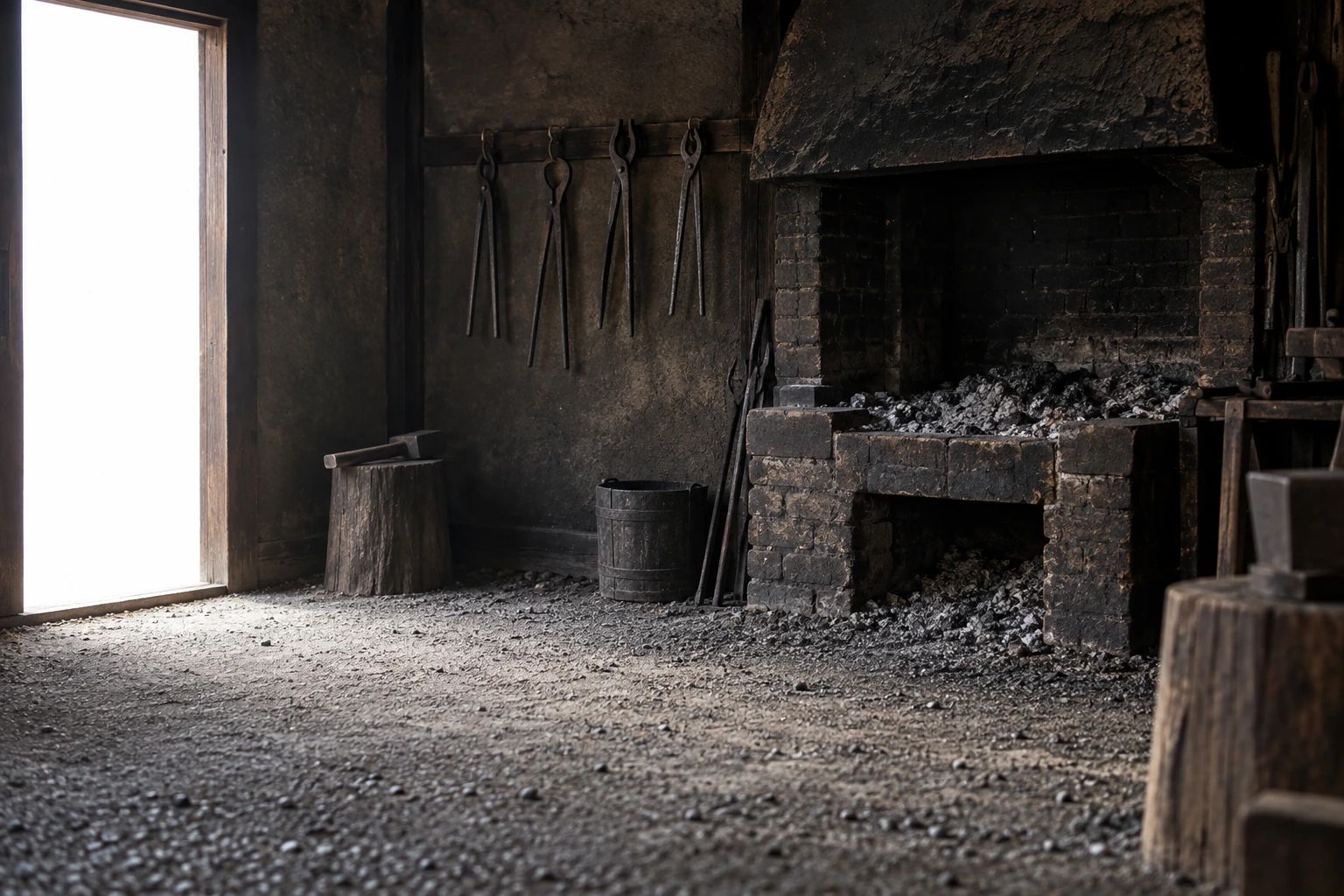
Table of Contents
Why leave Tokyo at all — three reasons to travel for a knife
Tokyo's Kappabashi is the world's greatest knife street, but a forge town is a different experience entirely. Kappabashi is a national showroom — efficient, comprehensive, and well-covered in our Kappabashi guide. A regional forge town, by contrast, is the smith's home. The smell of hot scale and quenching oil, the pitch of hammers on anvils, and the rhythm of water turning grey at the polishing wheel all make it physically clear why a knife from this region looks the way it does.
Three concrete reasons to make the journey. First, selection: a smith's back room holds prototypes, off-spec lengths, and limited-run steels that the Tokyo distribution channel never sees. Second, customisation: handle swaps, edge re-profiling and engraving that take weeks via Tokyo retail are sometimes done while you wait. Third, knowledge transfer: tell a smith you need a deba for splitting 3 kg sea bream and you will have a recommendation — steel, thickness, length — in thirty seconds. Read our Japanese knife type guide before going so the conversations land more deeply.
Best windows are April–May and October–November. Forges build heat in summer and access turns slippery in winter (especially for Echizen, Tsubame-Sanjo and Tosa). From Tokyo or Osaka as a base, Sakai, Seki, Tsubame-Sanjo and Banshu are reachable as day trips; Echizen and Tosa make better overnight expeditions. The rest of this guide treats each region as one h2 section so you can plan a tailored route.
Sakai (Osaka): the home of single-bevel Japanese knives
Sakai is the apex of traditional single-bevel Japanese knives. Estimates suggest over ninety per cent of the yanagiba, deba and usuba used in Japan's sushi, kappo and washoku kitchens originate in Sakai. The lineage goes back to the sixteenth century when Sakai became the Tanegashima-era centre of matchlock-musket forging; that smithing know-how transferred directly to swords, tobacco knives and eventually kitchen blades. The Sakai-kiwame stamp originated as a quality guarantee on tobacco-cutting knives commissioned by the Edo shogunate.
Sakai's defining feature is specialisation by stage. Forging the steel, attaching the soft-iron jigane, polishing, edge-setting, handle work and saya making are each performed by separate craftsmen. Brands you see — Sakai Takayuki, Aritsugu, Aoki Hamono Seisakusho (Yoshikane), Kikusui — are the names of finishers and merchants who coordinate the chain, not the smiths who pulled the steel from the fire. Aritsugu's flagship store is in Kyoto's Nishiki Market, an essential stop on any Kyoto food itinerary.
Getting there and what to see
From Shin-Osaka or Osaka station, take the Midosuji line via Sakaisuji-Honmachi to the Nankai line to Sakai or Sakai-Higashi station, roughly 30 to 40 minutes. Core stops:
- Sakai Denshokan (Sakai Traditional Industry Hall) and the Sakai Hamono Museum — A single stop: the hall, formerly called the Sakai Dento Sangyo Kaikan, shows knives alongside incense and chusen yukata fabric, the three pillars of Sakai's craft tradition, and houses the Sakai Hamono Museum ("CUT"), operated by the Sakai Cutlery Cooperative — forging history, process exhibits, and over 200 knives for sale. Open 10:00–17:00; closed on the third Tuesday of each month (the following day if that is a public holiday), from 29 December to 3 January, and on occasional other days.
- Mizuno Tanrenjo — A working forge that takes pre-booked tours of the full hand-forging cycle.
Most specialist shops cluster within walking distance of Sakai-Higashi station. With half a day you can visit five or six. See our Osaka and Sakai knife map for the exact geography.
Seki (Gifu): mass production meets master smiths
Seki city converted a 700-year sword-forging tradition into modern industrial cutlery. Today the city hosts over a hundred knife-making companies — by volume, the largest cutlery cluster in Japan. What sets Seki apart is the price spread: from supermarket-grade home knives to professional blades priced past US$1,000, the entire range is made within a few square kilometres.
Seki's brand layers go from elite (Misono, Sekimagoroku/Kai, Tojiro's contracted forging), through mid-tier (Kanetsugu), down to mass-market (Kai, Henckels Miyabi). OEM contracting is the worst-kept secret in the industry — many famous "Japanese" brands you buy abroad are physically forged in Seki. For double-bevel work — gyuto, santoku, petty — Seki's depth of bench is even greater than Sakai's.
Getting there and what to see
From Nagoya station, the Meitetsu plus Nagaragawa Railway combination reaches Seki station in about one hour to one hour twenty minutes. From Tokyo it is roughly three hours via Tokaido Shinkansen. Anchor points:
- Seki Cutlery Tradition Hall (Seki-Kaji-Denshokan) — A municipal museum covering Kamakura-era swords through modern cutlery, known for live traditional forging demonstrations on the first Sunday of each month. Closed for renovation from 7 September 2026 until 31 March 2027 (Seki City); the city will announce the reopening date.
- Feather Museum — A surprisingly serious museum of razors and edge tools run by Feather Safety Razor Co.
- Seki Hamono Hall — A central showroom for Seki-based brands, the right first stop to triangulate your shortlist.
- Direct factory outlets — Sekimagoroku, Misono and Tojiro all operate factory shops where seconds and over-runs sometimes appear at 30–50 per cent off list.
The Seki Cutlery Festival takes over the city on the second weekend of October each year — live forging, brand sales, and sword exhibitions. Hotels fill six months ahead. See our Seki knife map for routing.
Echizen (Fukui): the san-mai forging heartland
Echizen Uchihamono carries 700 years of history and was designated a national traditional craft in 1979. Tradition holds that the Kyoto swordsmith Chiyozuru Kuniyasu travelled to Echizen-Fuchu (modern Echizen city) in 1337 and forged sickles for local farmers, founding the lineage. Output is smaller than Sakai or Seki — perhaps a dozen workshops and around 100 craftsmen — but the forge-welding skill (san-mai construction, where high-carbon steel is sandwiched between layers of softer iron) reaches a level few other regions match.
Representative makers include Ryusen Hamono and Takamura Hamono (under the Echizen cutlery cooperative) and a new generation including Seisuke Hamono. Steel choices are dominated by traditional Aogami #2 and Shirogami #2 carbon steels, but stainless san-mai using VG-10 and SG2 has become more common in the last decade.
Getting there and what to see
The 2024 Hokuriku Shinkansen extension brought Echizen-Takefu station to within roughly three hours twenty minutes of Tokyo direct. From Kanazawa it is about thirty minutes; from Kyoto/Osaka, around 90 minutes via Tsuruga. Key stops:
- Takefu Knife Village (Takefu Naifu Mura) — A purpose-built artisan complex opened in 1993 housing more than a dozen forges under one roof. You can watch hammering through glass walls, browse and buy from each maker, and book a forging experience to make your own paper knife. Open 9:00–17:00; closing days are irregular.
- Echizen Uchihamono Hall — History exhibits dedicated to Echizen as a designated traditional craft.
- Individual workshops — Ryusen Hamono's home forge accepts visitors by appointment. Watching a single craftsman bring one knife from steel bar to finished edge is rarely possible elsewhere.
Pair Echizen with Kyoto and Kanazawa for an efficient three-day Hokuriku swing. See our Echizen knife map alongside the Kyoto guide.
Tsubame-Sanjo (Niigata): modern stainless and industrial design
Tsubame-Sanjo grew from early-Edo wakugi (Japanese nail) production into a comprehensive metalworking region. Tsubame and Sanjo are two adjacent cities — Tsubame leads in flatware and cutlery, Sanjo leads in knives and carpentry tools. After WWII, expertise from the flatware industry pivoted into stainless kitchen knives, and the region became the centre of Japan's globally exported stainless knife industry.
Tsubame-Sanjo's character is industrial design and precision machining rather than the one-craftsman-one-knife rhythm of Sakai or Echizen. Press-forging, sintered powder steel handling, and stainless precision finishing are the local strengths. Major brands include Tojiro, Glestain (Honda Yoko), Suncraft, Asahi, Yoshimi. Tojiro's Open Factory lets you observe the production line through glass and shop the full lineup at the on-site outlet, with English signage.
Getting there and what to see
From Tokyo, the Joetsu Shinkansen reaches Tsubame-Sanjo station in about two hours direct. From Niigata, local trains take 30 minutes. Anchor points:
- Tojiro Open Factory — The Tojiro Knife Gallery flagship store and open factory, in Tsubame city. Live production tours through glass plus a full retail outlet. Multilingual support.
- Kojo no Saiten (Factory Festival) — Held over three to four days in early October, more than a hundred local factories open their doors for tours and sales. Knives, but also other Tsubame-Sanjo metalwork.
- Tsubame-Sanjo Wing — A regional crafts gallery inside Tsubame-Sanjo station; ideal for visitors with only a 30-minute layover.
- Tsubame-Sanjo Jiba Sangyo Center — Sprawling local-industry showroom with the full regional catalogue under one roof.
Tsubame-Sanjo is the most practical "leave Tokyo before breakfast, return after dinner" knife region. Three or four shops in a single day is realistic. See our Tsubame-Sanjo knife map for routing.
Tosa (Kochi): the wild south, free-forge tradition
Tosa Uchihamono holds 400 years of history and a quirky, idiosyncratic reputation. Under the warlord Chosokabe Motochika, Tosa's smiths forged practical tools for mountain work, farming and forestry. The tradition of jiyu tanzo (free forging) — no fixed pattern, every knife matched to the user — survives today, producing fishery blades, forestry hatchets, mountain-foraging knives and a kitchen catalogue with no parallel elsewhere. The Tosa-style deba and certain regional nakiri are renowned for their distinctive cut.
Tosa's brands are weaker on retail distribution but strong on devotee following: Toyokuni, Ajimoto Hamono, Kurodori Tanzo Koba. Steel is overwhelmingly traditional carbon (Aogami, Shirogami). For mainstream stainless kitchen work, Seki and Tsubame-Sanjo win, but Tosa's "what if Japanese forge tradition met bushcraft" angle has earned it a global cult following among Western outdoor-knife enthusiasts.
Getting there and what to see
Reaching Kochi takes effort. From Tokyo, the fastest route is by air (Haneda to Kochi-Ryoma, about 1h20m). By train: Shinkansen to Okayama, then the Dosan Line limited express, totalling 5–6 hours. From Osaka, expect 4–5 hours. Day trips are unrealistic; build Tosa into a two-night trip at minimum.
- Tosa Hamono Distribution Center (Kami city) — The Tosa cutlery cooperative's showroom; can arrange forge visits.
- Toyokuni Tanzo — A Shimanto-area smith who accepts visits by appointment and ships internationally — one of few Tosa makers who do.
- Smiths in Kami and Susaki — Less tourism-polished but full of authentic noji-kaji (rural smith) atmosphere.
Treat Tosa as the pilgrimage region for serious enthusiasts — the next stop after you have worked through Sakai and Seki.
Banshu / Miki (Hyogo): carpentry tools and a quiet kitchen revival
Banshu Miki has been Japan's carpentry-tool capital for centuries — the home of plane (kanna), chisel (nomi), and saw (nokogiri) production. Kitchen-knife visibility is lower than Sakai or Seki, but the underlying forging tradition is as strong. The region was designated as a national traditional craft (Banshu Miki Uchihamono) in 1996, and several workshops are using their carpentry-tool know-how to launch kitchen-knife divisions.
Standard-bearers include the Miki Hardware Cooperative's designated workshops and independent masters like Seigen. The number of active smiths is declining, but new succession projects are slowly bringing younger hands into the trade.
Getting there and what to see
From Shin-Osaka, local trains via Shintetsu or expressway buses reach Miki city in 60–90 minutes. From Tokyo, allow about four hours via Shin-Osaka. Anchor points:
- Miki Kanamono Matsuri (Miki Hardware Festival) — Held over a November weekend each year; in 2026 it is scheduled for 7–8 November, 9:00–16:00, at Mikiyama Sogo Park, Miki City Cultural Hall and other venues. Planes, chisels, saws and knives are all laid out for sale and the smiths themselves are behind the counter.
- Kanamono Shiryokan (Hardware Museum) — Local industrial history and process exhibits.
- Individual workshops — Less tourism-friendly than Sakai or Seki; Japanese language is closer to mandatory.
Banshu/Miki works well as a second-region day from an Osaka base. Half a day in Sakai and half a day in Miki delivers a satisfying single-day Kansai knife tour.
Region-by-region comparison
The six regions side by side, with travel times and day-trip feasibility.
| Region | Specialty | From Tokyo | From Osaka | Day-trip feasibility |
|---|---|---|---|---|
| Sakai (Osaka) | Single-bevel sushi knives (yanagiba, deba, usuba) | ~3 hrs (Shinkansen) | ~30 min | Excellent from Osaka |
| Seki (Gifu) | Double-bevel: mass to premium | ~3 hrs | ~2 hrs | Good from Nagoya |
| Echizen (Fukui) | San-mai construction, traditional craft | ~3hr20 (Hokuriku Shinkansen) | ~1.5–2 hrs | OK via Kanazawa |
| Tsubame-Sanjo (Niigata) | Stainless industrial | ~2 hrs (Joetsu Shinkansen) | ~4 hrs | Easiest from Tokyo |
| Tosa (Kochi) | Free-forge, mountain blades | ~1h20 by air / 6 hrs by train | ~5 hrs | Hard, 2-day better |
| Banshu/Miki (Hyogo) | Carpentry plus kitchen revival | ~4 hrs | ~1–1.5 hrs | Good from Osaka |
One-day, three-day and seven-day itineraries
Realistic schedules sized to your time on the ground.
| Length | Tokyo-based plan | Osaka-based plan |
|---|---|---|
| 1 day | Tsubame-Sanjo round trip (Tojiro Open Factory + Tsubame-Sanjo Wing) | Sakai (Hamono Museum + specialist district), evening in central Osaka |
| 3 days | Day 1: Kappabashi (Tokyo) / Day 2: Tsubame-Sanjo / Day 3: Seki via Nagoya | Day 1: Sakai / Day 2: Kyoto (Aritsugu) plus an Echizen day trip / Day 3: Banshu/Miki |
| 7 days (enthusiast) | Kappabashi to Tsubame-Sanjo to Seki to Echizen to Kanazawa to Kyoto to Sakai to Osaka | Sakai to Banshu to Seki to Echizen to Kanazawa, fly to Kochi, Tosa, return Osaka |
Editor's recommendation: for a first regional trip, the three-day plan is the sweet spot. Forcing two regions into one day burns out your shopping judgement and leaves you returning home empty-handed. One region per day, mornings for visits and afternoons for purchases, is the right rhythm. Pre-read our Japanese knife brand recommendations and arrive with a shortlist of two or three target makers — that single discipline pays for itself.
Lodging: stay in central Osaka for Sakai, Nagoya for Seki, Sabae or Fukui city for Echizen, in front of Tsubame-Sanjo station for the Niigata leg, central Kochi for Tosa, and Kobe or Himeji for Banshu. Smiths start early; your hotel should be within thirty minutes of the workshop you want to see first.
Make one yourself
Most working forges need an appointment. In three of these regions — Sakai, Seki and Tsubame-Sanjo — a private guided visit can be booked ahead, and each fits into a day of the plans above.
Sakai, Osaka · 200 min
The musket-to-kitchen-knife history from the Sakai section, on a private tour of the Sakai Old Gunsmith Workshop and Residence and the Traditional Crafts Museum; you then sharpen and finish a knife at a Sakai knife workshop and take it home.
from ¥71,800 per person
Details & bookingSeki area, Gifu · 170 min
Seki's path from swords to today's blade industry, told through museums and local shops by certified swordsmith Miyata Tsuyoshi, then a private visit to a working forge to watch folding-forging and try the hammering yourself.
from ¥36,000 per person
Details & bookingTsubame-Sanjo, Niigata · 225 min
The wider metalworking region described above, on a private tour that starts at the historic hand-hammered copperware workshop Gyokusendo and moves on to local makers, from traditional craft workshops to large factories; hammering your own copper plate is optional.
from ¥17,363 per person
Details & bookingMost of these are booked by request: you propose a date, the workshop confirms it afterwards. Only a handful confirm on the spot — the operator filters those here. Prices as listed by the operator on 14 September 2026. The operator sets them and may change them at any time. Affiliate links: if you book, we may receive a commission at no extra cost to you. These are the operator's listings, not editorial picks. We are an independent publisher, not connected to the operator.