The Complete Whetstone Guide: Grits, Brands, and How to Use Them (2026)
QUICK ANSWER
Three stones cover home needs: #220-400 (chip repair), #1000-1500 (main sharpening), #3000-6000 (polish); soak waterstones 5-10 min before use.
Repair
#220-400
Main sharpening
#1000-1500
Polish
#3000-6000
Soak time
5-10 min
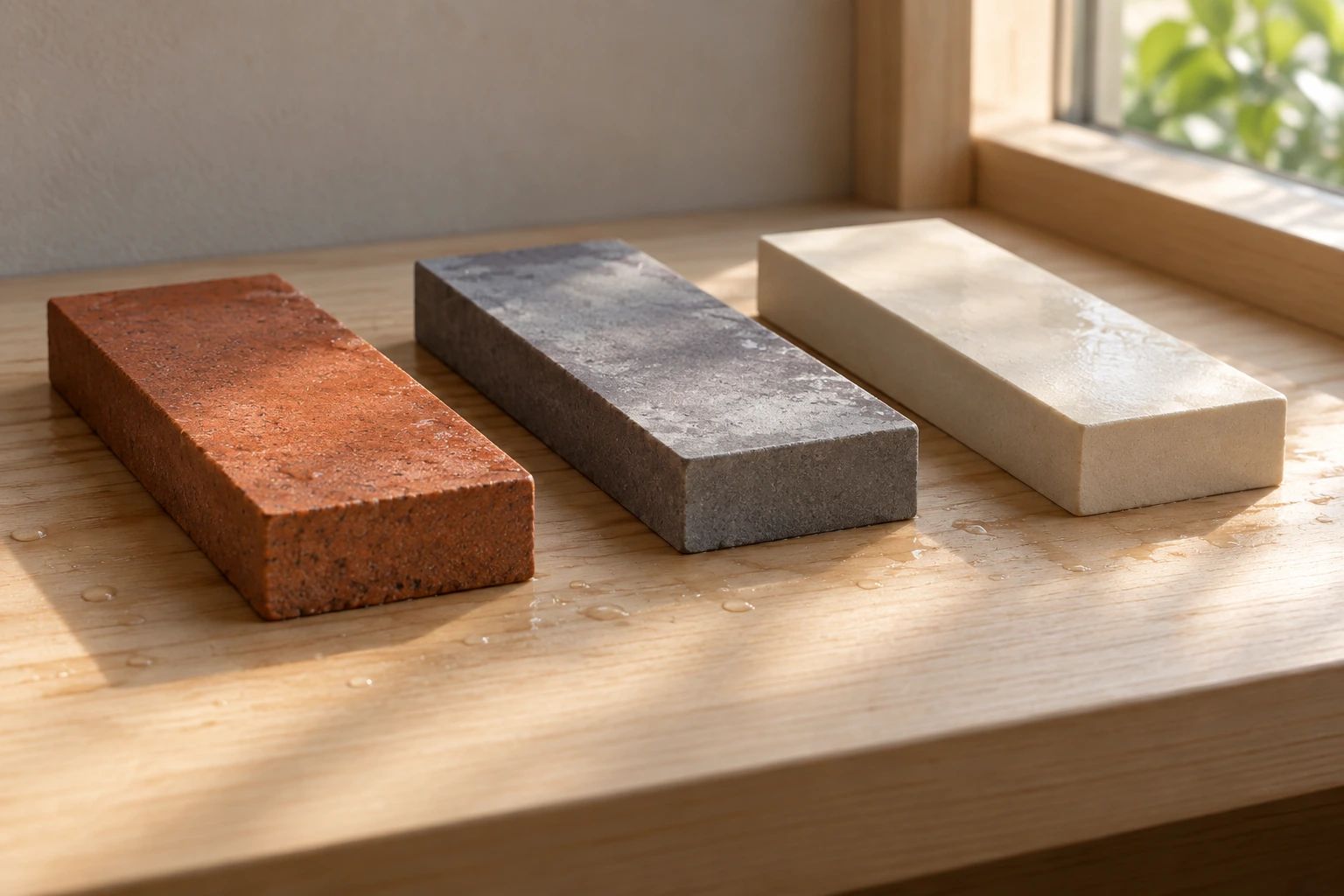
Table of Contents
TL;DR
For home use, two whetstones (#1000 + #3000) cover 95% of needs. Naniwa, Shapton, and King are the three trusted brands.
- Grits: #400 (repair) / #1000 (main sharpen) / #3000-6000 (finish) / #8000+ (mirror polish).
- Home cook: #1000 + #3000 = roughly $120 total = sufficient.
- Naniwa Pro = premium / Shapton Glass = splash-and-go / King = budget classic.
- Keep stones flat: regular maintenance with a nagura or diamond plate is critical.
- Japanese knives use water stones, not oil stones.
What a whetstone actually does
A whetstone is a block of bonded abrasive grains that removes microscopic amounts of steel to reset the edge geometry. Each pass over the stone shears off a fraction of a millimeter of metal, exposing a fresh, sharp edge. The stone is not "filing" the knife; it is acting like extremely fine sandpaper, with abrasive particles cutting tiny grooves into the bevel. Different grit sizes produce different scratch patterns, which is why a multi-stage progression matters.
Compared to pull-through sharpeners or electric machines, a whetstone gives you precise control over the angle, the amount of metal removed, and the final polish. This is why every serious cook and every sharpening angle tradition (Japanese, French, German) eventually returns to the stone. For the underlying technique, see our step-by-step sharpening guide.
The grit progression explained
Grit numbers describe particle size: lower numbers are coarser, higher numbers are finer. The Japanese JIS scale used by Naniwa, Shapton, King, and most quality stones is the standard reference. Below are the working ranges every home sharpener should understand:
- #220 to #400 (coarse) — Chip repair, reshaping bevels, restoring a badly neglected edge. Removes metal fast. Use only when needed.
- #800 to #1500 (medium) — The workhorse range. #1000 is the universal standard: it sets a working edge, removes a noticeable amount of metal, and forms a clear burr.
- #3000 to #6000 (finishing) — Refines the #1000 edge, polishes scratches, produces a clean push-cut.
- #8000 to #16000 (polishing) — Mirror finishes, hair-splitting sharpness. Mostly aesthetic for kitchen knives but essential for single-bevel yanagiba and razors.
The honest truth for most home cooks: a #1000 plus #3000 (or #1000/#6000 combo) covers everything. Adding a #400 only makes sense if you sharpen often or repair chips. Going past #6000 is connoisseurship, not necessity.
One important caveat: do not skip grits. Going directly from #400 to #6000 wastes effort because the #6000 cannot remove the deep #400 scratches in any reasonable time. Step through the progression — #400, #1000, #3000 (or #6000) — letting each grit refine the scratch pattern of the previous one. Each step typically takes one-third to one-half the time of the previous step.
Water vs synthetic vs natural Japanese stones
Synthetic water stones
The default choice for nearly every home and professional sharpener. Naniwa, Shapton, King, and Suehiro dominate this category. Bonded abrasives (silicon carbide, aluminum oxide, ceramic) cut quickly, release fresh particles as you work (the slurry), and rinse clean with water. Some require a 5 to 15 minute soak; ceramic stones like Shapton Glass are splash-and-go.
Oil stones
The Western tradition: Arkansas stones, India stones, Norton oil stones. They use mineral oil instead of water as the lubricant. They cut more slowly than Japanese water stones and are less common in modern Japanese kitchens. Acceptable for Western knives but suboptimal for hard Japanese steels.
Natural Japanese stones (天然砥石, tennen-toishi)
Mined primarily in the Kyoto region (Mt. Atago, Narutaki, Ohira). The famous mizu-ji, asagi, and suita stones produce the unique kasumi (mist) finish prized on traditional honyaki blades. Prices range from ¥30,000 to over ¥500,000 for top specimens. They demand experienced technique. Pressure, slurry management, and stone selection are all variables. Reserved for makers, restorers, and collectors. The article on sharpening stones covers the natural-stone tradition in more detail.
Top whetstone brands and recommendations
The four brands below cover virtually every quality-conscious home and professional kitchen in Japan. We have ranked them by the kind of cook each suits best.
- Naniwa Pro / Chosera (¥10,000 to ¥25,000 per stone) — The premium synthetic standard. Magnesia-bonded abrasive, exceptionally consistent, fast-cutting, low maintenance. Light pre-soak (5 to 10 minutes). Our top recommendation for serious home cooks.
- Shapton Glass (¥8,000 to ¥20,000) — Ceramic abrasive bonded to a glass backing plate. Splash-and-go, extremely durable, holds flat longer than soft stones. The professional kitchen choice when speed matters.
- King (¥3,000 to ¥8,000) — The classic budget Japanese stone. Soft, requires 10 to 15 minute soak, dishes faster than premium stones. Perfectly capable for the once-a-month sharpener.
- Suehiro (¥5,000 to ¥15,000) — Excellent #1000/#3000 combination stones at a fair price. The Cerax line is a long-time favorite of cooking schools.
Recommended starter combo: Naniwa Pro #1000 plus Naniwa Pro #3000, total around ¥18,000. This pairing handles every Japanese knife in a home kitchen for the next five to ten years. Add an Atoma 140 diamond flattener (¥10,000 to ¥15,000) and your setup is complete.
A common question we hear in shops: can I skip the #3000 and just use #1000? Yes, you can. A well-finished #1000 edge cuts beautifully on tomatoes, herbs, fish, and meat. The #3000 buys you a smoother push-cut, a cleaner finish on the steel itself, and a slightly longer-lasting edge. For everyday cooking, #1000 alone is the 80 percent solution.
Stone comparison table
Concrete model recommendations across price tiers and use cases:
| Stone | Type | Grit | Pre-soak? | Price | Best for |
|---|---|---|---|---|---|
| Naniwa Pro #1000 | Synthetic water stone | #1000 | 5 to 10 min | ¥10,000 to ¥15,000 | Main sharpening, every household |
| Naniwa Pro #3000 | Synthetic water stone | #3000 | 5 to 10 min | ¥10,000 to ¥15,000 | Finishing for double-bevel knives |
| Shapton Glass #1000 | Ceramic synthetic | #1000 | Splash | ¥8,000 to ¥12,000 | Splash-and-go, professional kitchens |
| Shapton Glass #4000 | Ceramic synthetic | #4000 | Splash | ¥10,000 to ¥15,000 | Fast finishing, no soak required |
| King KW-65 (#1000/#6000) | Synthetic combination | #1000 + #6000 | 10 to 15 min | ¥3,000 to ¥5,000 | Budget beginner combo |
| Suehiro Cerax #320 | Synthetic | #320 | Splash | ¥6,000 to ¥10,000 | Chip repair, bevel reshaping |
| Atoma 140 diamond plate | Diamond | #140 | None | ¥10,000 to ¥15,000 | Flattening other stones |
How to use a whetstone
The technique below applies to a standard double-bevel Japanese knife such as a gyuto or santoku. For single-bevel stones (yanagiba, deba, usuba) the angle and method differ. See our dedicated sharpening guide.
- Prepare the stone. Soak (if required) until bubbles stop rising. Place on a non-slip base or damp cloth. The stone must not move during sharpening.
- Set the angle. Approximately 15 degrees for double-bevel knives, 10 to 15 degrees for the bevel side of single-bevel knives. Two stacked coins under the spine give a useful 15-degree reference for a typical 210mm gyuto.
- Stroke with light pressure. Push and pull the blade across the stone. The weight of your hand is enough. Pressing harder does not sharpen faster, it only dishes the stone.
- Work the entire edge. Sharpen heel to tip in three or four sections, lifting the handle slightly as you reach the curved tip.
- Feel for the burr. When you feel a tiny rough wire on the opposite side of the edge, that section is done. Flip and repeat on the other side.
- Move to finer grits. Repeat the process on #3000 (and finer if desired). Final passes should be very light, almost weightless.
- Strop or rinse. A few light passes on a leather strop or the dull side of newspaper removes the final burr.
Flatness maintenance
A flat stone is non-negotiable. A stone develops a hollow in the middle (called dishing) because most pressure lands there. A dished stone curves the bevel and ruins your geometry. Check flatness regularly. Beginners should check every session, experienced sharpeners every few sessions.
- Diamond flattening plate (best method). An Atoma 140 or DMT XX-Coarse plate flattens any stone in 30 to 60 seconds. Wet the stone, scrub with the diamond plate in a figure-eight pattern, rinse.
- Pencil-grid test. Draw a tic-tac-toe pattern on the stone surface with a soft pencil. Flatten until every pencil line has been removed evenly. Lines remaining in low spots reveal where you still need to work.
- Nagura stone. A small soft stone rubbed on the main stone to raise slurry and clean the surface. Useful for dressing, not for major flattening.
- Two-stone method. Two stones rubbed face-to-face under water will flatten each other. Slow but free.
Splash-and-go ceramic stones (Shapton Glass) hold flat much longer than soft soaking stones (King). If flatness maintenance is a chore for you, prioritize ceramic.
How often? A serious home cook flattening a Naniwa Pro #1000 every five to ten sharpening sessions is plenty. A King soaking stone may need flattening every two to three sessions. A Shapton Glass might go twenty sessions between flattenings. The diamond plate is so fast that "more often" never costs more than a minute.
Stone life, storage, and replacement
Synthetic stones 25mm thick or thicker last 5 to 10 years of regular household use. Heavily-used professional kitchens may exhaust them in 2 to 3 years. Replace when the stone is worn below 10mm or has dished beyond what flattening can recover.
Diamond plates last essentially forever. The diamond grit is bonded to a metal substrate and does not dish. Expect 20+ years of home use.
Natural Japanese stones last lifetimes. Many of the finest stones in use today were mined a century ago. Store them dry, never freeze them, and they will outlive you.
Storage: Always dry the stone fully before storing. Stand it vertically to drain. Never store wet. Water trapped inside can crack the stone in winter, and bacteria can grow in the slurry. Wrap natural stones in paper or cloth, and keep them away from temperature extremes. For a complete maintenance routine that covers your knife as well as the stones, see our maintenance guide, and pair this with our steel types primer to understand which stones suit which steels.