Japanese Petty Knife Guide: The Essential Utility Blade
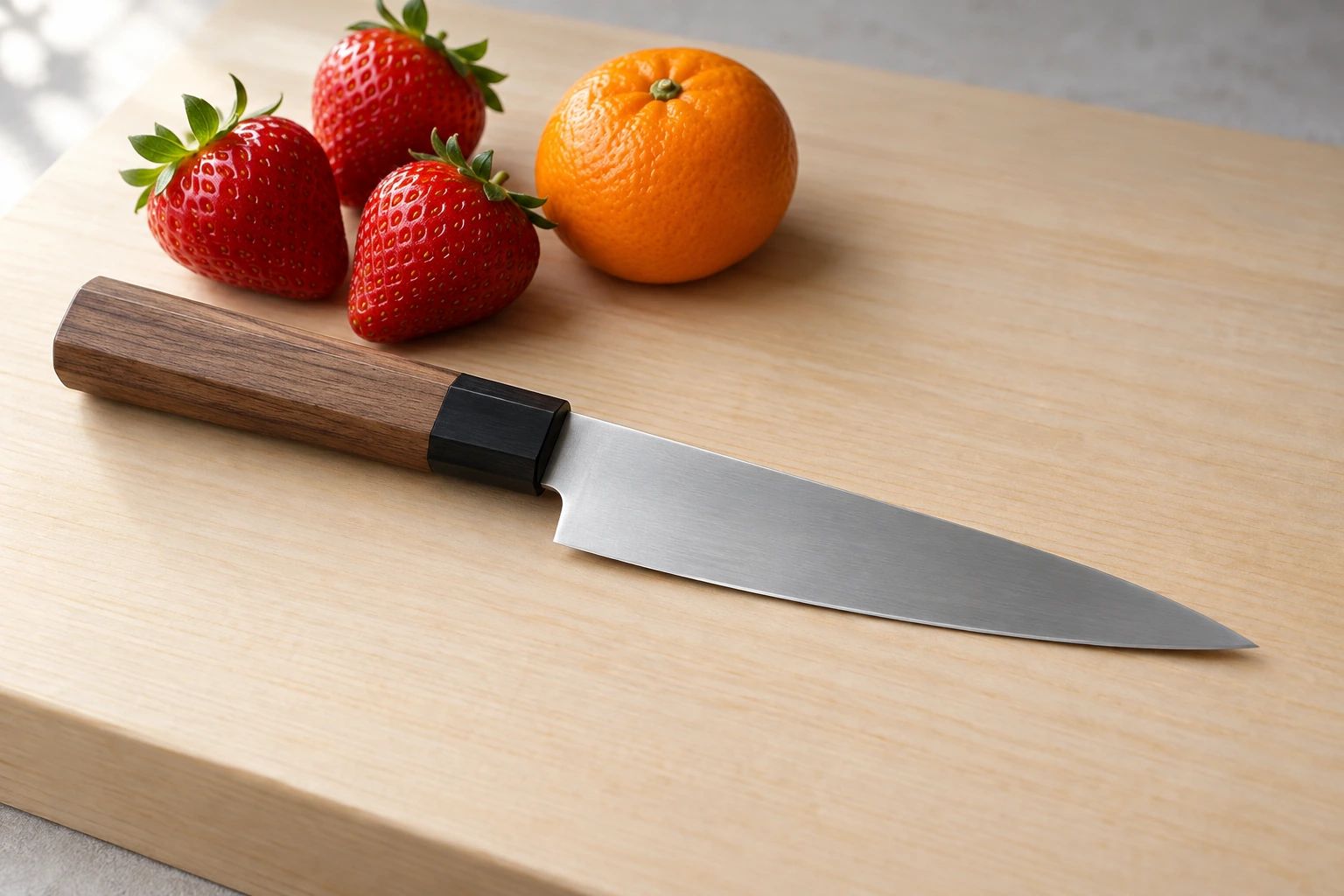
Table of Contents
The petty knife (ペティナイフ) is Japan's compact utility blade — smaller than a santoku but larger than a paring knife, it fills the critical gap for detail work that larger knives can't handle. Every professional Japanese kitchen has at least one petty, and it's the ideal second knife for home cooks.
What Is a Petty Knife?
The Japanese petty knife (from the French "petit," meaning small) is a utility knife typically 80-150mm in length. It features a thin, pointed blade that excels at precision tasks. While Western paring knives tend to be short and stubby, Japanese petty knives are longer and more refined, making them useful for both in-hand work and cutting board tasks.
How We Tested
Our editorial team tested 12 petty knives over 3 weeks at specialist shops in Kappabashi, evaluating edge retention, tip precision, and peeling performance. Each knife was used daily for fruit peeling, herb mincing, shallot brunoise, and shrimp deveining. We assessed sharpness out of the box, comfort during extended use, and how well each knife held its edge after repeated cutting sessions. The recommendations below reflect real-world performance, not spec sheets.
What a Petty Knife Is Used For
- Fruit preparation — peeling apples, segmenting citrus, hulling strawberries
- Vegetable detail work — trimming, tourné cuts, brunoise of shallots
- Protein prep — deveining shrimp, trimming silver skin, butterflying chicken
- Garnishing — creating fine vegetable garnishes and decorative cuts
- Small slicing tasks — cutting cheese, slicing small tomatoes, portioning herbs
5 Tasks Your Petty Knife Does Best
- Peeling and segmenting citrus — Supreme orange and grapefruit segments cleanly. The petty's thin tip follows the membrane precisely, something a chef's knife can't do.
- Deveining shrimp — Slide the petty tip along the back of each shrimp to expose and remove the vein in one smooth motion. A 120mm petty is ideal for this.
- Mincing shallots and garlic — For 1-2 shallots or a handful of garlic cloves, the petty is faster than reaching for a larger knife. Its short blade gives you full control for fine brunoise.
- Trimming silver skin from tenderloin — Slide the tip under the silver skin, angle the blade slightly upward, and pull through. The petty's precision prevents wasting meat.
- Slicing small tomatoes and strawberries — The thin, sharp blade glides through delicate skins without crushing. Cherry tomatoes, strawberries, and figs all benefit from a petty's gentle touch.
Size Guide
| Size | Best For | Style |
|---|---|---|
| 80mm (3") | Pure paring — in-hand peeling work | Paring style |
| 120mm (4.7") | Most versatile — in-hand + cutting board | All-round petty |
| 150mm (6") | Light cutting board work, small gyuto alternative | Utility style |
Petty vs Paring Knife vs Utility Knife
Understanding the differences between these three small knives helps you choose the right tool:
| Feature | Japanese Petty | Western Paring | Western Utility |
|---|---|---|---|
| Typical length | 80-150mm (3-6") | 75-100mm (3-4") | 120-180mm (5-7") |
| Weight | 40-80g | 30-50g | 70-110g |
| Blade angle (per side) | 10-15° | 15-20° | 15-20° |
| Steel hardness | 60-65 HRC | 56-58 HRC | 56-58 HRC |
| Best for | Detail work, peeling, small board tasks | In-hand peeling, coring | Sandwiches, small slicing |
| Cutting board use | ★★★★★ | ★★★ | ★★★★ |
| In-hand use | ★★★★ | ★★★★★ | ★★ |
| Price range | $30-200 | $10-40 | $15-50 |
Bottom line: The Japanese petty is the most versatile of the three. It combines the precision of a paring knife with the cutting board capability of a utility knife, all with a sharper, harder edge.
Our Recommendations
Best Budget: Tojiro DP Petty (120mm) — ~$35
VG-10, 3-layer. The same outstanding value as the Tojiro DP santoku, in a compact size. Sharp, reliable, affordable.
Best Mid-Range: MAC Professional Petty (135mm) — ~$65
Incredibly thin and sharp. The MAC petty is a professional favorite — light enough for extended detail work, sharp enough for anything.
Best Professional: Misono UX10 Petty (150mm) — ~$90
Swedish stainless steel, the same line trusted by professional chefs across Japan. The 150mm length is ideal for light cutting board work. Thin blade geometry, comfortable Western handle, and excellent edge retention make this the petty that professionals reach for daily.
Best Premium: Shibata Kotetsu R2 Petty (135mm) — ~$180
SG2/R2 steel, laser-thin blade geometry. One of the finest petty knives available. Exceptional cutting feel and edge retention.
Best Collector's Pick: Sukenari SG2 Petty (135mm) — ~$160
Hand-forged in Echizen by a master bladesmith. SG2 powdered steel core delivers outstanding sharpness and edge life. The thin grind and balanced profile make this petty a joy to use for extended prep sessions. A step up from production knives in fit, finish, and feel.