Japanese Knife Styles: Wa, Yo, Western-Hybrid — Complete Style Guide (2026)
QUICK ANSWER
Japanese kitchen knives split by region: Sakai (sushi/traditional), Seki (modern stainless), Echizen (forged carbon), Tsubame-Sanjo (industrial), Tosa (utility).
Sakai
Sushi/sashimi
Seki
Modern stainless
Echizen
Carbon forge
Tsubame-Sanjo
Volume production
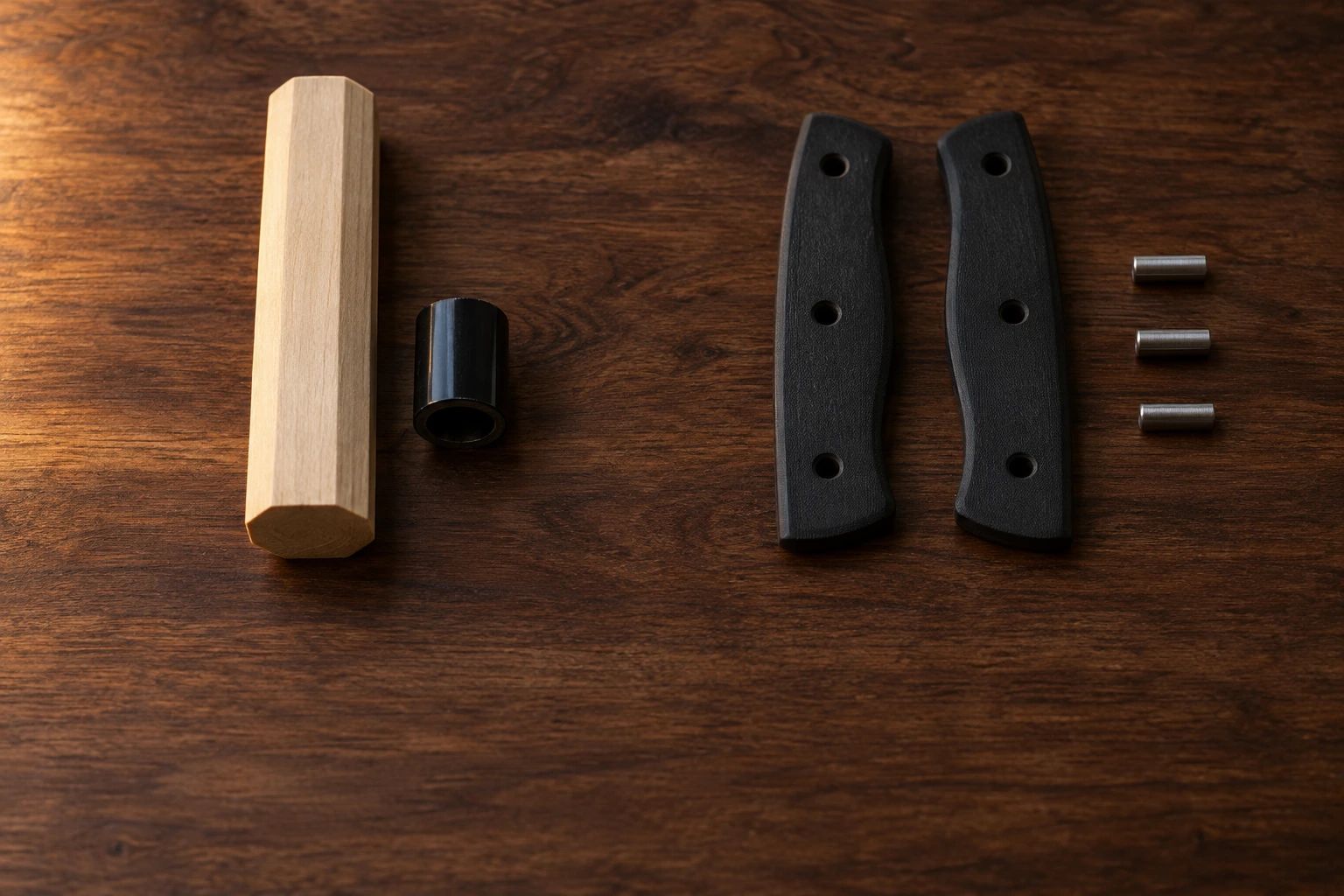
Table of Contents
TL;DR — Which style is for you
Three main styles, three different design philosophies:
- Wa-handle (和柄) — Traditional Japanese. Light, partial-tang, round/octagonal/D-shaped wooden handle with horn ferrule. Forward-balanced. Pairs with single-bevel and thin double-bevel blades.
- Yo-handle (洋柄) — Western-influenced. Full-tang, riveted bolster, contoured Western-style handle. Heavier and rear-balanced. Pairs with thicker double-bevel blades.
- Hybrid (D-handle and friends) — Modern compromise. Full-tang construction but asymmetric handle profile. Most Shun, some Miyabi. Designed for Western buyers who want "Japanese feel" without re-learning grip.
Quick pick: first Japanese knife in a Western kitchen → Yo-handle or hybrid. Want to learn traditional technique → Wa-handle. Already comfortable with Japanese knives → buy whatever fits your hand best on the day.
What does "style" mean in a Japanese knife?
In Western knife culture, "style" usually means decoration — what the handle looks like, whether the blade is Damascus or plain. In Japan, style is structural. The style decides how the steel is tanged into the handle, how the weight is distributed, and what cutting motion the knife is designed for.
Three things define a Japanese knife's style:
- Tang construction. Partial-tang (Wa) vs full-tang (Yo). This is the most important structural decision and dictates handle weight, replaceability, and balance point.
- Handle shape. Round, octagonal, D-shape, or Western contoured. Each shape locks into a different grip and supports a different cutting motion.
- Balance philosophy. Forward-balanced (Wa) for push-cutting, rear-balanced (Yo) for rocking, neutral (some hybrids) for general use.
Style and blade type are loosely coupled but not identical. A gyuto can be Wa or Yo. A santoku can be Wa, Yo, or D-handle. A yanagiba is almost always Wa. The single-bevel traditional knives (yanagiba, deba, usuba) are functionally tied to Wa, while modern double-bevel knives are flexible across all three styles. For deeper coverage of the Wa-Yo split, see our Wa vs Yo handle guide.
Wa-handle — the traditional Japanese style
The Wa-handle is the descendant of Edo-period knife handles. Its design is older than Japanese steel itself — what changed over centuries was the blade, not the handle.
- Tang: Partial. The steel tang extends 1/3 to 1/2 the length of the handle, friction-fit into a wood blank.
- Material: Magnolia (ho, 朴) wood — light, fine-grained, neutral-smelling. Buffalo horn ferrule (called kuchigane) at the blade end. Premium versions: chestnut, ebony, rosewood.
- Shape: Round (most common), octagonal (firmer grip), or D-shape (right- or left-handed, mostly on traditional usuba and yanagiba).
- Weight: Typically 30-50g for a 240mm gyuto handle — about half the weight of a Yo-handle.
- Balance point: Usually right at the heel of the blade, or slightly into the blade itself.
- Grip: Pinch grip on the blade is dominant. The handle is mostly steered, not gripped.
- Replaceable: Yes. Most Japanese knife shops can replace a worn handle for ¥3,000-¥15,000.
The Wa-handle's main advantage is nimble forward balance. With the weight concentrated at the heel of the blade, the knife "falls forward" into the cut. For straight push-cuts on vegetables, fish skin, and meat slices, this is the ideal balance. It is less suited to long rocking motions like mincing herbs — for that, a heavier Yo-handle wins.
For Western buyers, the adjustment is mostly mental. The Wa-handle feels light and "incomplete" for the first day or two, then suddenly clicks. Most converts say they cannot go back to a riveted Western handle after six months on a Wa.
Yo-handle — the Western-influenced style
The Yo-handle (洋柄, "Western pattern") emerged in the early 20th century when Japanese makers began producing knives for Western-style restaurants opening in Tokyo and Yokohama. The handle imports European construction onto a Japanese blade.
- Tang: Full. Steel runs the entire length of the handle, sandwiched between two handle scales.
- Material: Pakkawood, micarta, riveted laminated wood. Premium versions: stabilized burl, G10.
- Shape: Contoured Western chef-knife handle, often with a bolster.
- Weight: 80-120g for a 240mm gyuto handle — significantly heavier than Wa.
- Balance point: Usually 5-15mm in front of the bolster — neutral to slightly rear-balanced.
- Grip: Western chef grip works fine. Pinch grip is also possible.
- Replaceable: No (riveted construction).
The Yo-handle is the dominant style in modern Japanese professional kitchens for Western-style cuisine. If you walk into a hotel restaurant in Tokyo or a French-influenced bistro in Osaka, the gyutos on the prep line are almost all Yo-handle. Brands like Misono, MAC, Tojiro DP, and Sakai Takayuki yo-line all default to Yo-handle.
Yo-handles also have a meaningful manufacturing advantage: the riveted construction is more durable in dishwasher environments (not that you should ever put a Japanese knife in a dishwasher), and the full-tang construction is structurally stronger. For working professionals who replace knives every 5-7 years, this is the reliable choice.
The hybrid — Shun D-handle and friends
In the late 1990s, Kai Corporation faced a marketing problem. Western buyers loved the idea of a Japanese knife but found Wa-handles unfamiliar. The solution was the Shun D-handle — a full-tang Western construction with an asymmetric "D" cross-section that mimics the right-handed bias of a traditional Wa.
- Tang: Full (Western construction).
- Material: Pakkawood D-shape, hot-pressed.
- Shape: Asymmetric. The "D" flat sits in the palm of the dominant hand. Sold in right-handed and (less commonly) left-handed versions.
- Weight: Between Wa and Yo — typically 60-80g for a 240mm gyuto.
- Balance: Neutral to slightly forward.
- Grip: Pinch grip is comfortable; Western chef grip works too.
The hybrid style is dominated by Shun, but several other brands have variants — Miyabi Birchwood, some Yaxell models, and various boutique Sakai workshops experimenting with Western/Japanese fusion handles. The hybrid is genuinely useful for first-time Japanese knife buyers in Western markets, because it shortens the learning curve without sacrificing the underlying blade geometry.
The trade-off: hybrids cannot be re-handled the way Wa-handles can. When the handle wears out (10-15 years of daily use), the knife is retired. Hybrids also cost slightly more than equivalent Yo-handles because of the proprietary handle moulding.
Full comparison table
| Property | Wa-handle | Yo-handle | Hybrid (D-handle) |
|---|---|---|---|
| Tang | Partial | Full | Full |
| Handle material | Magnolia + horn | Pakkawood / micarta | Pakkawood |
| Shape | Round / oct / D | Contoured Western | Asymmetric D |
| Weight (240mm gyuto) | 30-50g | 80-120g | 60-80g |
| Balance | Forward (at heel) | Neutral to rear | Slightly forward |
| Best cutting motion | Push-cut, pull-cut | Rocking, chopping | Push-cut, light rocking |
| Re-handleable | Yes | No | No |
| Handed | Symmetric (round/oct), handed (D) | Symmetric | Handed |
| Typical price premium | +20-40% over Yo | Baseline | +10-30% over Yo |
| Maintenance | Wipe dry, occasional oil | Wipe dry, mineral oil rare | Wipe dry only |
| Pair with single-bevel | Yes (standard) | Rare | No |
| Best for | Push-cutting, traditional cuisine | Western technique, working pros | First Japanese knife, hybrid cooking |
How to choose your style
| Your situation | Style | Why |
|---|---|---|
| First Japanese knife, coming from German | Hybrid D-handle | Familiar grip, modern blade |
| First Japanese knife, no prior experience | Yo-handle | Lowest learning curve |
| Want to learn traditional Japanese technique | Wa-handle | The technique was designed around it |
| Working line cook | Yo-handle | Durable, dishwasher-resistant (still don't) |
| Sushi or Japanese cuisine | Wa-handle | Required for single-bevel knives |
| Left-handed | Wa-handle (round/oct) or Yo-handle | Symmetric grips work either-handed |
| Gift for someone else | Hybrid or Yo-handle | Lower mismatch risk |
| You enjoy rocking-cut mincing | Yo-handle | Heavier handle assists rocking |
| You want a knife to last 50 years | Wa-handle | Replaceable handle = blade lasts |
| Tight budget | Yo-handle | Same blade, lower price than Wa equivalent |
Care differences across styles
The blade care is the same for all three styles. The handle care is different.
- Wa-handle: The magnolia wood and horn ferrule are both organic. Wipe dry after every use. Once a year, rub a thin coat of food-grade mineral oil or unscented camellia oil into the wood. Never soak in water; never leave standing in a wet sink. If the ferrule cracks (humidity changes), a Japanese knife shop can re-fit it for ¥1,000-¥3,000.
- Yo-handle: Pakkawood and micarta are essentially waterproof. Wipe dry. No oil needed. Avoid extreme heat (dishwasher, hot pan storage) which can loosen the epoxy in the rivet seats.
- Hybrid: Same as Yo — pakkawood is stable. Wipe dry. The asymmetric D shape can develop a finger groove from heavy daily use; this is cosmetic and does not affect performance.
For all three, the universal rules apply: no dishwasher, no soaking, no glass or stone cutting boards. See Japanese knife care guide for the full care routine.
Where to buy each style
- Wa-handle. Easiest to find at specialist retailers — Japanese Knife Imports (US), Knifewear (Canada), Korin (NYC), Tosho Knife Arts (Toronto). At Kappabashi, look at Aritsugu, Tsubaya, and Kamata. Sakai workshops (Sakai Takayuki, Masamoto) default to Wa.
- Yo-handle. Easiest to find anywhere — Tojiro DP, MAC, Misono, Global, the Yo lines of Sakai Takayuki. Amazon and major cookware retailers carry them.
- Hybrid. Shun dominates this category. Williams Sonoma, Sur La Table, every department store. Some Miyabi and Yaxell models also fit.
Our standard recommendation: your first Japanese knife should be a Yo-handle or hybrid, your second should be a Wa-handle if you enjoyed the first. By the time you understand your own cutting style, you will know which direction to lean.